Skip to content
43 Books · Updated August 2026

The Best Java Books for Every Skill Level

A hand-reviewed guide to the best Java books available today, with no filler and no paid placements — from beginner Java books and core Java fundamentals to advanced concurrency and JVM internals, plus Spring Boot, design patterns, and Java interview and certification prep.

43 books reviewed
6 skill tracks
Aug 2026 last updated

Editor's picks

If you only read one book per stage of your Java journey, start here.

Cover of Head First Java: A Learner's Guide to Real-World Programming by Kathy Sierra, Bert Bates, Trisha Gee

Head First Java: A Learner's Guide to Real-World Programming, 3rd Edition

Best for: First-time programmers who want an engaging, visual approach

A visually driven, puzzle-and-story approach to learning Java that trades dry syntax dumps for exercises, illustrations, and 'brain-friendly' explanations. This third edition brings the material up through Java 17 and adds coverage of lambdas, streams, and modern collections. Best suited to readers who find traditional programming textbooks tough to stay engaged with.
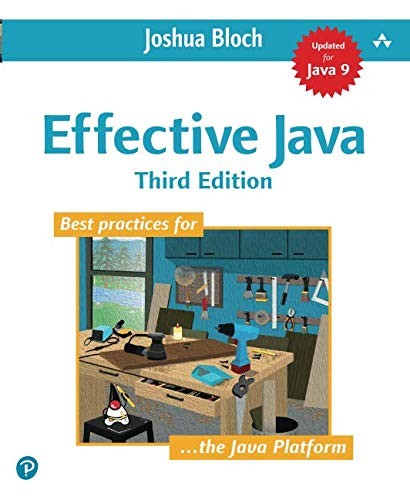
Cover of Effective Java by Joshua Bloch

Effective Java, 3rd Edition

Best for: Java developers who want to write more idiomatic, defensible code

Joshua Bloch's item-by-item guide distills decades of API design experience from his time leading Java platform work at Sun and Google into concrete, justified rules covering generics, enums, lambdas, streams, and object lifecycle. The 3rd edition folds in Java 7 through 9 features while keeping the same terse, example-driven format. It works both as a cover-to-cover read once you already know core Java and as a reference to consult when a specific design question comes up.

Cover of Java Concurrency in Practice by Brian Goetz, Tim Peierls, Joshua Bloch, Joseph Bowbeer, David Holmes, Doug Lea

Java Concurrency in Practice

Best for: Developers who need a rigorous foundation in Java concurrency

Written by Brian Goetz together with several members of the JSR-166 expert group (including Doug Lea and Joshua Bloch), this book breaks down the theory and practice of writing correct, thread-safe Java code — covering the Java Memory Model, locks, atomics, and the java.util.concurrent library. It remains the book many teams point new hires to before they touch multithreaded code. Best suited for developers who already know core Java and want a rigorous mental model for concurrency rather than a quick tutorial.

Frequently asked questions

What is the best book to learn Java from scratch?

Head First Java is the most commonly recommended starting point because of its visual, example-driven teaching style. If you prefer a more traditional, reference-style approach, Java: The Complete Reference is a strong alternative. See our full beginner Java books list for more options.

What is the single most recommended Java book for professional developers?

Effective Java by Joshua Bloch is the book most experienced Java developers point to first — it's less about syntax and more about writing idiomatic, maintainable Java. See our intermediate books list.

Are older Java books still worth reading?

Yes, for concepts — no, for syntax details tied to a specific Java version. Books like Design Patterns (1994) and Effective Java remain relevant because they teach principles, not APIs. For anything version-specific (modules, records, virtual threads), pair an older classic with a modern, up-to-date resource.

Do I need to read books in order, or can I jump to advanced topics?

You can jump ahead if you already have the fundamentals from another language. Most of the books on this list assume you're comfortable with basic programming concepts (variables, loops, functions) even in the "beginner" track — they focus on what's Java-specific.

How is this list curated and kept up to date?

Every book here has been read or extensively reviewed against public tables of contents, sample chapters, and reader feedback before being added. See our full methodology for how we select and periodically re-review books.